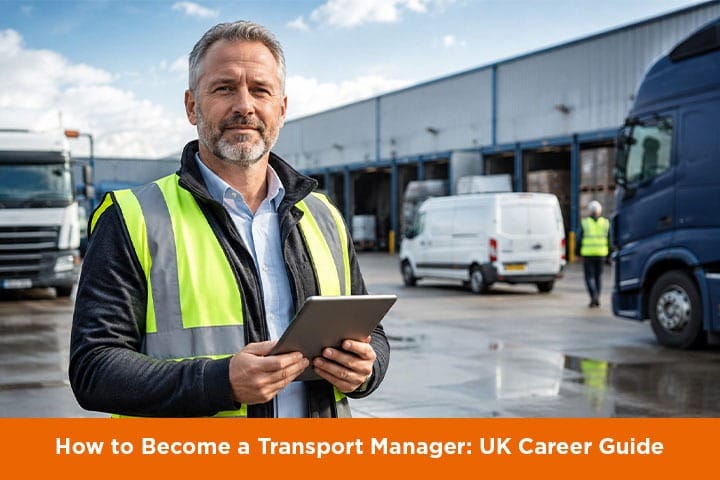


A transport manager kind of oversees vehicle fleets and makes sure road transport is happening safely and legally. They are, honestly, a key part of the UK transport industry, even if people don’t always notice them.
When businesses run lorries, vans, or buses, they usually need a properly qualified transport manager.
Without that person, they can’t operate a transport business lawfully. The role stretches across road transport, logistics, and passenger transport, too. In practice, their job keeps freight moving while also making sure companies stay compliant.
Transport managers handle many tasks every day. They manage vehicles and plan routes to keep deliveries on schedule. They monitor drivers to make sure everyone follows the rules. Tachograph checks are part of the job too.
Then there are tachographs, which record drivers’ hours, and they help prove legal compliance.
Transport managers also look after vehicle maintenance arrangements and road safety, not just the paperwork side of it. They ensure the business holds a valid operator licence at all times. Transport compliance is at the heart of everything they do.
A transport manager is responsible for the smooth running of all transport activities. They plan daily operations and supervise drivers throughout the working day. They manage transport documentation and keep records accurate and up to date. They check that all vehicles meet legal standards before they go out.
Maintaining continuous and effective control over the fleet is essential. The role sits within a clear legal framework set by the operator licensing system.
Here are the main responsibilities of a transport manager:
One transport manager can legally oversee a maximum of 50 vehicles. Above that, the business may need to appoint additional managers. Each vehicle operator must have at least one nominated manager in place.
If you want to work as a transport manager in the UK, you need a CPC qualification. CPC means Certificate of Professional Competence, and it’s not optional.
A valid certificate of professional competence is a legal requirement. Without it, you cannot be named on an operator’s licence. The transport manager CPC proves you have the knowledge to manage a compliant operation.
If you manage goods vehicles, you need the road haulage CPC. It covers the rules for lorries, vans, and freight transport. The road haulage CPC is often the most common path for people already working (or trying to work) in logistics.
If you manage buses or coaches, you need the passenger transport CPC instead. This version focuses on passenger transport operations and the rules around carrying people. You cannot use a road haulage CPC to manage passenger transport, and vice versa.
The CPC can cover national transport, international transport, or both. If your vehicles travel abroad, you need the international CPC. This is required for businesses holding an international operator’s licence.
A good starting point is to get into a transport or logistics role first. Any experience in fleet management, or in driver supervision, is a major advantage. That kind of background tends to make the next steps feel more realistic. Understanding how road transport works will prepare you for the CPC.
Enrol on a CPC course with an approved training provider. Most providers offer classroom courses with course materials included. Training covers legal rules, vehicle safety, and business management. You will need to study hard before sitting the exam.
The CPC exam is set by an approved body such as OCR. It includes multiple papers covering transport law and operations. You must pass all parts to receive your certificate.
Once qualified, you can apply for transport manager roles. Logistics companies, haulage firms, and bus operators all hire transport managers. You may also work as a transport manager on behalf of multiple businesses.
Businesses that operate commercial vehicles need an operator’s licence. There are two main types: the standard national licence and the standard international licence. A standard national or international operator’s licence must name a qualified transport manager.
The traffic commissioner grants and monitors all operator licences. They check that businesses meet the legal standards required to operate vehicles.
The traffic commissioner is the regulator for road transport in the UK. They grant operator licences and can suspend or revoke them. Transport managers are recognised by the traffic commissioners and held accountable.
If compliance falls short, the traffic commissioner can call a business in for a hearing. It is the transport manager’s job to make sure that never happens.
Not every business has a full-time transport manager on the payroll. Some use an external transport manager or a freelance transport manager instead.
A nominated transport manager can be contracted to manage compliance on behalf of a business. This is a legal option under UK operator licensing rules. However, the nominated transport manager still takes on full legal responsibility.
Also, a freelance transport manager might work with several clients at once, kind of like taking on multiple contracts. That route often suits smaller operators who don’t need a full-time manager on site.
Demand is strong for transport managers across many sectors. Logistics companies, road haulage firms, and supply chain businesses all hire for this position. Passenger transport operators also need qualified managers to stay compliant.
Over time, some transport managers move into operations manager roles as their experience builds. Working in transport can turn into a long, varied career rather than a short stint.
Staying updated really matters in this profession. Many managers do a refresher course to keep their knowledge current. Continuous professional development, or CPD, helps you stay aware of changing laws.
Some employers also require licence awareness training as part of ongoing learning. Professional development also improves your chances of career progression.
The Chartered Institute of Logistics and Transport, or CILT, supports transport professionals. Membership of CILT shows commitment to high standards. Many employers look favourably on CILT-accredited transport qualifications.
Entry-level transport managers in the UK typically earn between £28,000 and £35,000. Experienced managers can earn significantly more, especially in large logistics businesses. Demand for qualified transport managers continues to grow across the UK. The role offers long-term job security and room to progress.
Becoming a qualified transport manager takes effort, but the rewards are worth it. You need a valid CPC certificate and a strong understanding of UK transport law. From there, you can work as a transport manager across a wide range of industries.
Whether you join a road haulage firm or work as a freelance manager, the opportunities are real. With the right qualifications and commitment, a successful transport career in the UK is well within reach.