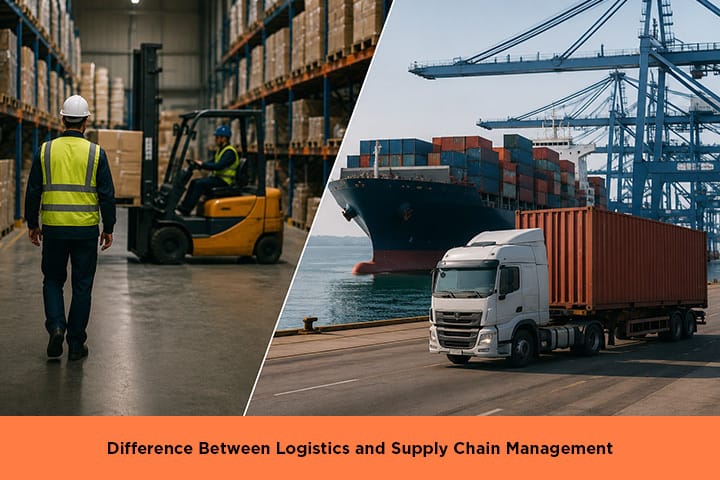

Many people confuse logistics and supply chain management. They often use both terms in the same way. However, they have different roles. Understanding both helps businesses work better and grow faster. The difference between logistics and supply chain management matters for every business. It also matters for customers. Good planning helps businesses save money. It also improves customer satisfaction. This guide explains the difference between the two. It also shows how they work together.
Logistics refers to planning the movement and storage of goods. It starts at the point of origin. The goal of logistics is simple. It ensures products reach customers safely and on time. Logistics focuses on the movement of products. It also manages transport and storage. Businesses use logistics management to organise daily operations. This keeps deliveries smooth. Logistics ensures products move without delays. It also reduces waste and extra costs. The role of logistics includes many daily tasks. Each task supports business success.
Common logistics activities include:
Businesses use different types of logistics every day.
Inbound logistics manages products entering a business. This includes sourcing raw materials from every supplier. It also includes procurement, transport, and receiving goods. The aim is to ensure that the right product arrives on time. Good planning also keeps healthy inventory levels.
Outbound logistics manages products leaving the business. This includes packing, shipping, and order fulfilment. This helps companies serve their customers promptly. Faster delivery increases customer satisfaction and loyalty.
Reverse logistics involves goods that have been returned by customers. Companies evaluate these goods, repair or recycle them, or exchange them where appropriate.
A warehouse stores products before shipping. Effective warehouse management keeps items well organised. Many firms employ a warehouse management system. The software helps track stock and control inventory. Better storage reduces mistakes and delays.
Transport is another important logistics task. Good transportation management helps businesses move goods efficiently. Many companies also use fleet management software to optimise delivery routes and reduce fuel costs. Other businesses outsource their transportation needs to third-party logistics providers that professionally manage transportation and deliveries.
Supply Chain Management, or SCM, is more comprehensive than just a logistics service. It involves all business operations. It begins with finding a source of materials. It continues until customers receive finished products. The entire supply chain includes many connected businesses. The supplier, manufacturer, warehouse, distribution center, and retail store are parts of a supply chain. Collaboration and coordination of all actions in supply chains is a must. There is a connection between logistics and supply chain management. However, logistics is a component of SCM.
Management involves planning every business process.
These supply chain processes include:
Together, they improve the overall supply chain.
Strong supplier management builds reliable partnerships. Reliable suppliers deliver quality raw material on time. This reduces delays across production.
Businesses study customer demand before making products. They also forecast future sales. Better planning prevents shortages and extra stock. This improves supply and demand balance.
Modern businesses need supply chain visibility. Managers want visibility across every stage. This helps solve problems faster. It also improves decision-making. Better visibility supports an effective supply chain.
Good SCM and logistics improve business performance. They reduce costs and improve quality. They also help businesses gain a competitive advantage. An effective supply chain management strategy supports long-term growth. It also helps businesses respond faster to market changes. Finally, it improves customer satisfaction by delivering products on time.
Many people ask about the difference between logistics and supply chain management. Both support business success. However, they have different responsibilities. Logistics focuses on moving products from one place to another. Supply chain management plans and controls every business stage. In simple words, logistics is to ensure products arrive safely. Supply chain management makes sure the whole business works together. This is the easiest way to understand the difference.
The table below explains the key differences.
Logistics | Supply Chain Management |
Logistics refers to transport and storage. | Supply chain covers every business process. |
Focuses on the movement of goods. | Focuses on the flow of goods across businesses. |
Handles shipping and warehouse management. | Manages suppliers, production, logistics, and customers. |
Supports one part of operations. | Controls the entire supply chain. |
Improves delivery speed. | Improves overall business performance. |
Helps move products. | Helps improve planning and profits. |
This comparison explains logistics vs supply chain clearly. It also answers the difference between supply chain management and logistics.
The biggest difference is the scope. Logistics operations cover transport, storage, and delivery. Supply chain management covers every connected business activity. It manages products across the entire supply chain.
The goal of logistics is fast delivery. It also protects products during transport. Management focuses on improving every business process. This includes suppliers, factories, transport, and customers.
Logistics management keeps products moving. It also supports inventory control inside the warehouse. Supply chain managers study inventory levels carefully. They adjust stock based on customer demand. This helps businesses avoid shortages.
Logistics mainly starts after products are ready. Supply chain management starts much earlier. It begins by choosing the right supplier. It also improves supplier management over time. Strong supplier relationships reduce delays.
Both systems support customers. However, they do this differently. Logistics delivers products quickly. Supply chain management improves every customer experience. Both help businesses meet customer needs. Both improve customer expectations.
Many people compare SCM and logistics. However, they should work together. Good supply chain logistics depend on strong teamwork. Every business process connects with another. For example, purchasing affects production. Production affects transport. Transport affects delivery. Delivery affects customer satisfaction. When every step works well, businesses improve supply chain performance. They also reduce waste and lower costs.
Another question that frequently appears concerns whether logistics and supply chain management can be considered the same concept. No, they cannot. Logistics is a critical component of the entire supply chain. Imagine logistics as a puzzle piece that comprises the whole picture. Supply chain management joins every piece together. Such process consists of planning, procurement, manufacturing, transportation, warehousing, and delivery. This combination makes up an efficient supply chain.
Let us consider a furniture company example. First, it buys raw materials from a reliable supplier. The factory makes finished products. Products move into a warehouse for safe storage of goods. Next, delivery vehicles move goods to retail stores. Finally, customers receive their orders. The transport process is logistics. Managing every step is supply chain management. This shows the difference between logistics and SCM clearly.
Modern businesses rely on technology every day. Software improves managing logistics and planning. It also improves coordination and management. Many businesses use transport software. Others use inventory software. Some choose a warehouse management system. These tools improve accuracy. They also increase supply chain visibility.
Better technology helps businesses react faster. It also improves order fulfillment and customer service. Many companies also invest in software development services. Custom software connects transport, warehouses, and suppliers.
Some businesses need business application development for daily operations. Others choose Custom Software Development for unique business needs. Large organisations often combine these tools with full stack development services. These solutions improve reporting and automation. They also help improve supply chain management.
Strong logistics and supply chain management help businesses grow with confidence. Good planning reduces delays and lowers operating costs. It also improves efficient logistics across daily operations. Businesses can respond faster to changing markets. They also manage stock more accurately.
Better planning improves inventory management. It also reduces wasted products and storage costs. Strong systems help businesses ensure that the right products reach customers. They also deliver to the right place at the right time. Reliable delivery improves trust and loyalty. This leads to better customer satisfaction. It also creates a stronger competitive edge.
Every business faces supply chain challenges. Late deliveries can slow production. Poor planning may increase costs. Low stock can affect sales. Too much stock increases storage expenses. Weak communication can delay decisions. Global events may also affect the global supply network. Businesses should prepare for unexpected changes. Regular reviews help reduce risks.
Businesses can improve performance with simple steps. Choose reliable suppliers. Build strong supplier relationships. Use accurate sales forecasts. Monitor inventory levels regularly. Improve communication across teams. Track deliveries in real time. Invest in modern technology. Review business performance often. These steps help improve supply chain performance. They also support effective supply chain management.
Both concepts are frequently used interchangeably despite the fact that there is some difference between them. The point is that logistics concentrates on transport, warehousing, and delivery processes while supply chain management takes into account all business operations. Companies perform better with both systems combined.
Understanding logistics and supply chain management enables making informed decisions. Logistics deals with moving and storing products. It keeps products moving safely and efficiently. Supply chain management controls every stage of business operations. It starts with sourcing raw materials. It ends when customers receive finished products. Together, they improve business performance.
They also support better planning and stronger customer relationships. Whether you run a small company or a large organisation, both matter. A well-managed supply chain reduces costs. It also improves efficiency and service quality. When businesses combine strong logistics with smart planning, they gain lasting success. They also build a clear competitive advantage in today’s market.
Logistics is mostly about moving and storing goods. Supply chain management sort of governs the whole journey, from sourcing and procurement to the very last delivery part.
Yes, logistics is one key component inside supply chain management. It deals with transport, warehousing, and the actual product handoff.
Because it boosts planning, lowers total expenses, increases efficiency, and lets companies answer customer demand more on time and more consistently.
Common types include inbound logistics, outbound logistics, reverse logistics, warehouse management, and transportation management. Sometimes people group these in slightly different ways too.
Technologies help in inventory monitoring, warehouse management, route planning or transport, greater transparency, and efficient order fulfillment. It also helps teams decide sooner, with less guesswork, even when things change fast.