Over time with scaling up your business, managing warehouses, orders and deliveries become too hard. Staff hiring and transport arrangements add more operational cost and challenges. That is where third-party logistics (3PL) comes in to take care of all such issues.
Whether you run a retail business, eCommerce store or a manufacturing company, 3PL can simplify your complex operations. So, you can focus on revenue and scale without compromising the operational efficiency.
In this guide, you will learn how third-party logistics works, the benefits you can get, and choosing the right logistics partner can change the whole game. But before moving ahead, let’s first know what 3PL is
3PL (Third-Party Logistics) means outsourcing logistics operations to an external company specialising in supply chain services.
A 3PL service provider performs some logistics functions on behalf of another business firm. The functions may involve storing goods, taking care of order fulfillment, packaging items, and delivery.
While some service providers provide basic warehousing and transportation services, others may provide all-encompassing services.
As such, it is clear that the definition of 3PL goes beyond movement of cargo.
Simplistically, 3PL allows companies to outsource logistics without setting up their own logistics infrastructures.
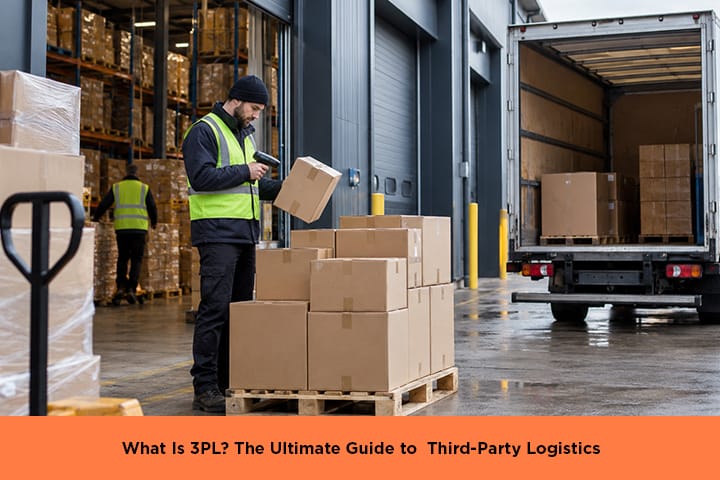
3PLs can support businesses with several logistics tasks. A 3PL company handles the flow of goods, from the moment stock is received until customer orders are shipped. Many also take on returns work and share delivery and warehouse results.
After shipments arrive, warehouse workers log the inventory after verification. And, they place items in set storage places so teams can find them easily.
This keeps stock counts more reliable. It also makes better use of the space that is already there.
A 3PL tracks how much stock is on hand. They also note product movement inside the facility. Warehouse software gives clearer insight into what is available.
With this, a business can avoid running out of key items. It can also reduce having too much tied up in inventory. Solid stock data supports planning and restocking decisions.
When orders arrive, the 3PL receives order details through linked systems. Staff make the required stock ready, confirm amounts, and pack products to ensure protection during transportation.
After packing, the provider sets up shipment with the right delivery partner. This helps keep order details correct and improves delivery timing.
Most 3PL firms coordinate with suppliers, warehouses, and customers for transport, so they can choose delivery options after analysing cost, distance, and delivery time etc.
They can also handle reverse logistics. That includes checking returned goods and processing them. Items that are suitable can be sent back into inventory for future orders.
Some logistics firms do more than supply-chain. They also handle label updates, put items together, and prepare custom packaging.
They can bundle parts into kits that are ready to send, which lets a store or brand meet its own requirements for items.
Today’s 3PL operators often use software to track how deliveries and stock move. They may share numbers on arrival times, inventory changes, and how quickly items sell through.
With this view, a company can spot problems before they cause any loss or big damage. It can also make day to day supply chain work smoother.
A 3PL warehouse is a storage site run by an outside logistics business. Another company uses it to store and control its products.
In contrast to an in-house setup, the outside team carries out the warehousing tasks that were agreed on.
A typical 3PL warehouse handles:
Some sites can also add flexible storage and extra packing work.
In that case, a 3PL site does not only hold items on shelves. It enables broader warehousing and shipment work, using trained people, tools, and warehouse space.
Different companies choose outside logistics support as per their needs based on the product type, the buyer, and ways of transportation in various locations.
Common industries using 3PL services include:
Small or mid sized firms often see value in outsourcing logistics. And, a 3PL provider can supply ready made space and know how, without a big build out.
The main idea is to link storage, order handling, and shipping. Even if each deal looks a bit different, many setups follow a common path.
A warehouse management system is often used. It can support stock checks, order updates, and daily yard movement.
Tell us your requirements, and let our experts build a Reliable solution around your business.
Tell us about your products, orders and delivery needs.
We plan the right logistics services for your business.
Your logistics will be managed with care and efficiency.
When firms hand off logistics, they may see smoother operations and less strain in the supply chain. Some common gains include:
Warehouses and delivery coverage need a lot of money upfront. With 3PL, a firm may avoid some facility and hiring costs. Also, shipping prices can be better when the provider already works with carriers.
Order size does not stay the same all year. Sales events and holiday deals can spike demand fast.
A 3PL firm can scale up and down when that happens. You can change your fulfilment needs without building or expanding your own site.
Logistics takes time. It also needs staff, planning, and steady effort. When you outsource, your team can focus on sales, marketing, and product work. Storage, picking, packing, and shipping can be handled by specialists instead.
Well run 3PL firms have handled hard shipping work before. They use inventory software and shipment tracking tools. With this in place, stock counts can be more reliable. Delivery plans also line up better.
Buyers want correct orders and fast delivery, which you can get through a reliable 3PL partner. Smooth order fulfilment can also lead to repeat orders.
A 3PL firm can check returned items and change stock data. Items that are in good condition can be put back into inventory for later selling. A clear return flow helps support teams and cuts down on busy work.
3PL can help a lot, but it can also bring downsides. There are trade-offs when you hand work to another company.
Clear agreements and careful provider selection can help minimise these challenges.
Not every 3PL is the same. Different providers offer different logistics skills. When you know the categories, it is easier to pick the right fit.
These businesses shift items between locations. They might do road loads, air cargo, and trips that cross borders.
These firms keep products in their spaces. They run stock control too. They also move goods onward to buyers. Shops, wholesalers, and brands often pick this type.
Freight forwarders arrange shipment routes. They coordinate with suppliers, transport firms, and the final stop. They also take care of the shipping forms.
These providers plan transport routes and line up delivery. They choose carriers, track shipments, and work to keep transport costs in check.
3PL and 4PL both support logistics and supply chain work. Still, the scope is not the same. The role and level of involvement can change.
Feature | Third-Party Logistics (3PL) | Fourth-Party Logistics (4PL) |
Focus | Executes specific logistics operations | Optimises the entire supply chain |
Services | Warehousing, fulfilment and transportation | 3PL services plus strategic planning |
Control | Manages agreed logistics activities | Coordinates the entire supply chain |
Responsibility | Performance of contracted tasks | Overall supply chain performance |
Ideal Choice | Businesses needing operational support | Businesses needing strategic management |
A 3PL takes care of set logistics tasks. A 4PL oversees broader coordination across the supply chain.
Freight forwarding and third party logistics both help move products. But the day to day duties are not identical. Each option fits different operational needs.
Feature | 3PL | Freight Forwarding |
Main Focus | Logistics and fulfilment | Freight transportation |
Warehousing | Usually available | Not always included |
Inventory | Often included | Generally not included |
Order Fulfilment | Picking, packing and dispatch | Usually not included |
Transportation | Arranges and manages deliveries | Coordinates freight shipments |
Returns | May manage reverse logistics | Usually outside core services |
Some companies use these services at the same time. A freight forwarder can manage shipping across borders. A 3PL can run local storage and last-mile deliveries.
There is no one date that works for all firms. Still, some signals suggest you may need extra help.
Consider partnering with a 3PL provider when:
First, look at what you pay now to run logistics in-house. After that, match this to the cost estimates you get from a 3PL. Look at the fees for storage. Also check picking and packing costs. Include fulfilment charges. Then add transport costs. Lastly, see if there are charges for software or other tech.
Next, plan for what you will need next. Watch how much work you see during peak times. Also review the tools you already use today.
Your choice should fit your actual needs. A single provider will not handle every task the same way. Some firms work well with warehousing. Others may be better at delivery. Some also give stronger support.
Consider these important factors before selecting a 3PL provider:
A good 3PL should take time to learn your logistics setup. Your deal should be clear on roles and timelines. You should also set up regular reviews of results.
The third-party logistics market keeps shifting as customers want more. Tools and automation are now common. Many firms also push for greener options.
Some important developments include:
These changes can help providers run faster. They can also offer options that fit different types of businesses.
Storage, transport, and delivery needs differ by company. Transit Fleet focuses on practical logistics that can adjust as needs change.
We work with businesses on tailored third-party logistics. The focus is dependable transport and clear distribution. We also aim to keep day-to-day logistics smooth.
If you need warehousing, movement of products, or fulfilment help, the best fit starts with knowing how your business works today.
Get Your Third-Party Logistics Solution Through Transit Fleet Today!
[https://transitfleet.co.uk/logistics-third-party-logistics-3pl-services/]
3PL is short for third-party logistics. It usually means you pay another business to take on logistics work. That can include warehouse storage, moving goods, and handling customer orders.
There are four common categories:
1) transport-focused providers
2) warehousing and distribution-focused providers
3) freight forwarding providers
4) managed transportation providers
3PL service cost is not fixed, rather it depends on storage space, order volumes, handling requirements and transportation etc. Some providers charge separate fees for individual services, while others offer a whole package covering all.
Yes. Smaller firms can use storage and order fulfilment support. They do not need to build their own logistics setup to do it.
3PL covers a set of logistics tasks. 4PL covers a wider range of supply chain work. It also tends to coordinate multiple partners.
There’s no fixed time because 3PL duration depends on the complexity of the operations, inventory sizes and other technological requirements.
Yes. However, different organizations offer different services in terms of international shipping.
"*" indicates required fields